
US tariffs action camera prices are the question for US buyers this week — and the numbers making headlines are not quite what they seem. Here is what the proposed duties could mean for action camera prices in the United States.
On 25 November, the Office of the US Trade Representative (USTR) proposed a new round of duties on 14 economies under a Section 301 investigation into what it calls “structural excess capacity” in manufacturing. None of the new duties is in force yet. These are proposals only, and they now go to consultation.
What was proposed
The 14 economies are China, the European Union, Japan, South Korea, Taiwan, Thailand, Vietnam, Malaysia, Indonesia, Bangladesh, Cambodia, India, Singapore and Switzerland. The UK is not on the list. USTR has yet to make a determination on Mexico or Norway, and Canada was not part of this investigation.
- European Union: 15%
- Japan, South Korea, Switzerland and Taiwan: up to 15%
- Thailand, Malaysia and Indonesia: up to 18%
- China: up to 20% on many goods, with different treatment for products listed in annexes
- Vietnam: up to 35%, which could be adjusted to 20% if it reaches a trade agreement
Why the real increase is smaller than the headline
Those headline rates cannot simply be added to the duty already paid on imported kit. As law firm Wiley explains, the new duties will largely top up the tariffs imposed in July, rather than sitting on top of them in full.
For products already paying the July tariff, the maximum extra increase would be around 2.5 percentage points for Japan, South Korea and Switzerland, and 5 points for the EU and Taiwan. For Thailand it would be 5.5 points, for China goods outside the annexes 7.5 points, and for Malaysia and Indonesia 8 points. Vietnam is the outlier at up to 22.5 points, although that could fall to 7.5 points if it reaches a trade agreement.
For example, another 2.5% on $2,000 of Japanese kit already paying the July tariff means up to $50 more in duty.
The sting in the tail
USTR has also set out higher, contingent rates if trade commitments prove “unsatisfactory”: up to 40% for China, up to 25% for South Korea, Taiwan, Thailand, Malaysia and Indonesia, and up to 20% for the EU and Japan. There is, as yet, no clear test for what counts as unsatisfactory.
Exemptions exist for each country. In Japan’s case, RedShark found no annex listing for the main camera headings or camera lenses. Pushback has already begun: Japan has protested to the US, while the European Commission strongly rejects the premise that Europe is a source of structural overcapacity and expects any resulting measure to respect the trade deal struck in 2025.
US tariffs action camera prices: what it means for buyers
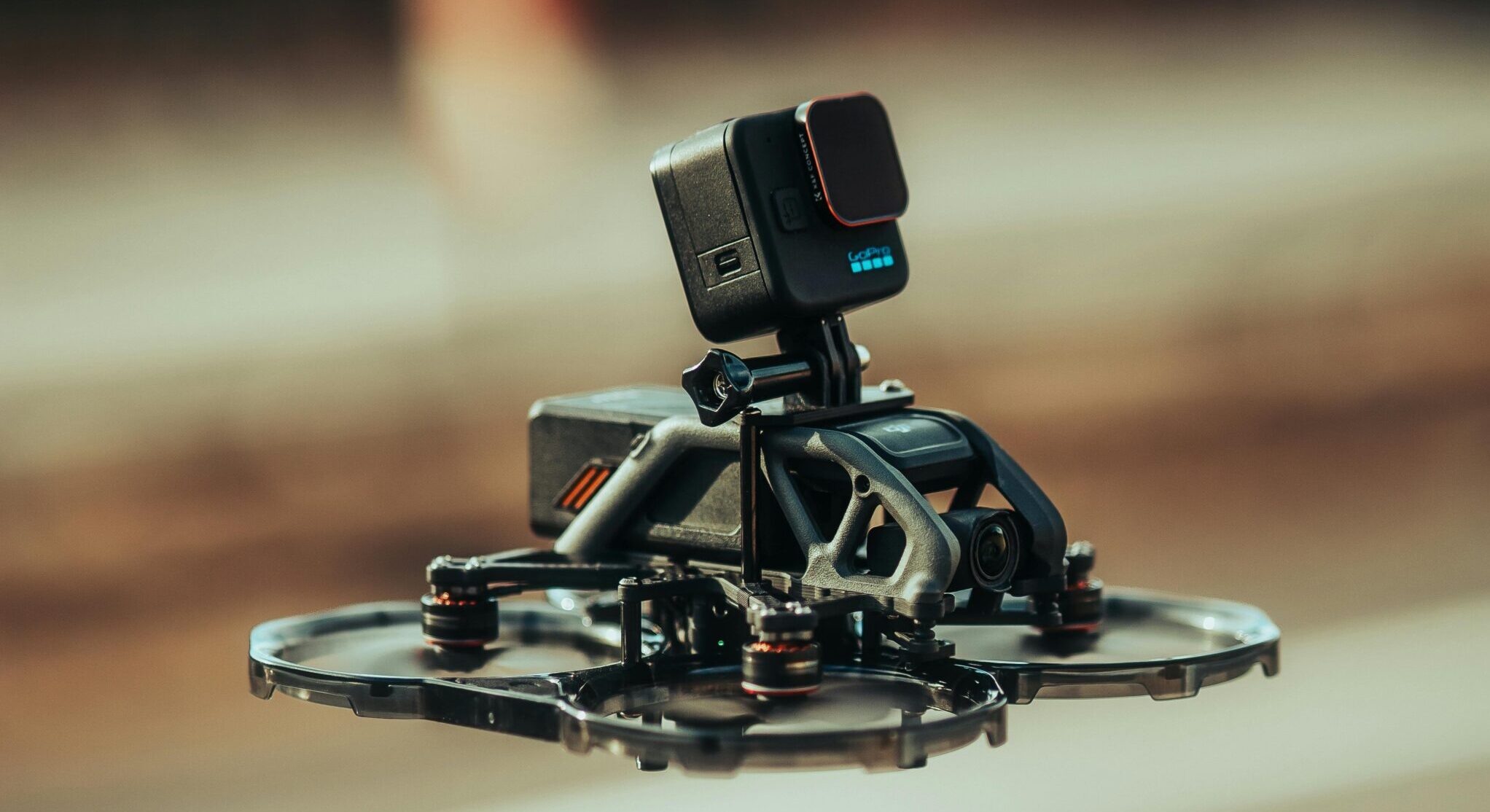
The following is our own context, not a claim made by RedShark. Most action cameras are made in China, Vietnam and Thailand, so any duties on those countries feed straight into US shelf prices. A 2.5–7.5 point rise on a $400 camera is roughly $10–$30 more in duty, before retailer margins. The Vietnam exposure matters most for brands that shifted production there, because its potential increase is by far the largest. That is the core of the US tariffs action camera prices story.
That makes the Black Friday deals available now worth a close look. GoPro’s MISSION 1 PRO is currently $599, the Insta360 Ace Pro 2 is $309.99 and the GO 3S is $299.99. If duties rise in 2027, today’s prices may be the cheapest window for some time.
What happens next
Written comments and requests to appear at the hearings are due by 5 January 2027, with hearings scheduled to start on 25 January 2027. There is no date yet for the new tariffs to take effect, but the current US-China trade truce is due to expire on 10 January 2027, so that date is one to watch.
The main proposed rates are less frightening than the headlines suggest. The risk is what follows: contingent rates, a trade truce running out and a consultation that could still push the numbers higher. We will update this story as the January dates approach, and as the picture for US tariffs action camera prices becomes clearer.
Source: RedShark News, “US tariffs 2026: what they mean for camera kit”, 26 November 2026.